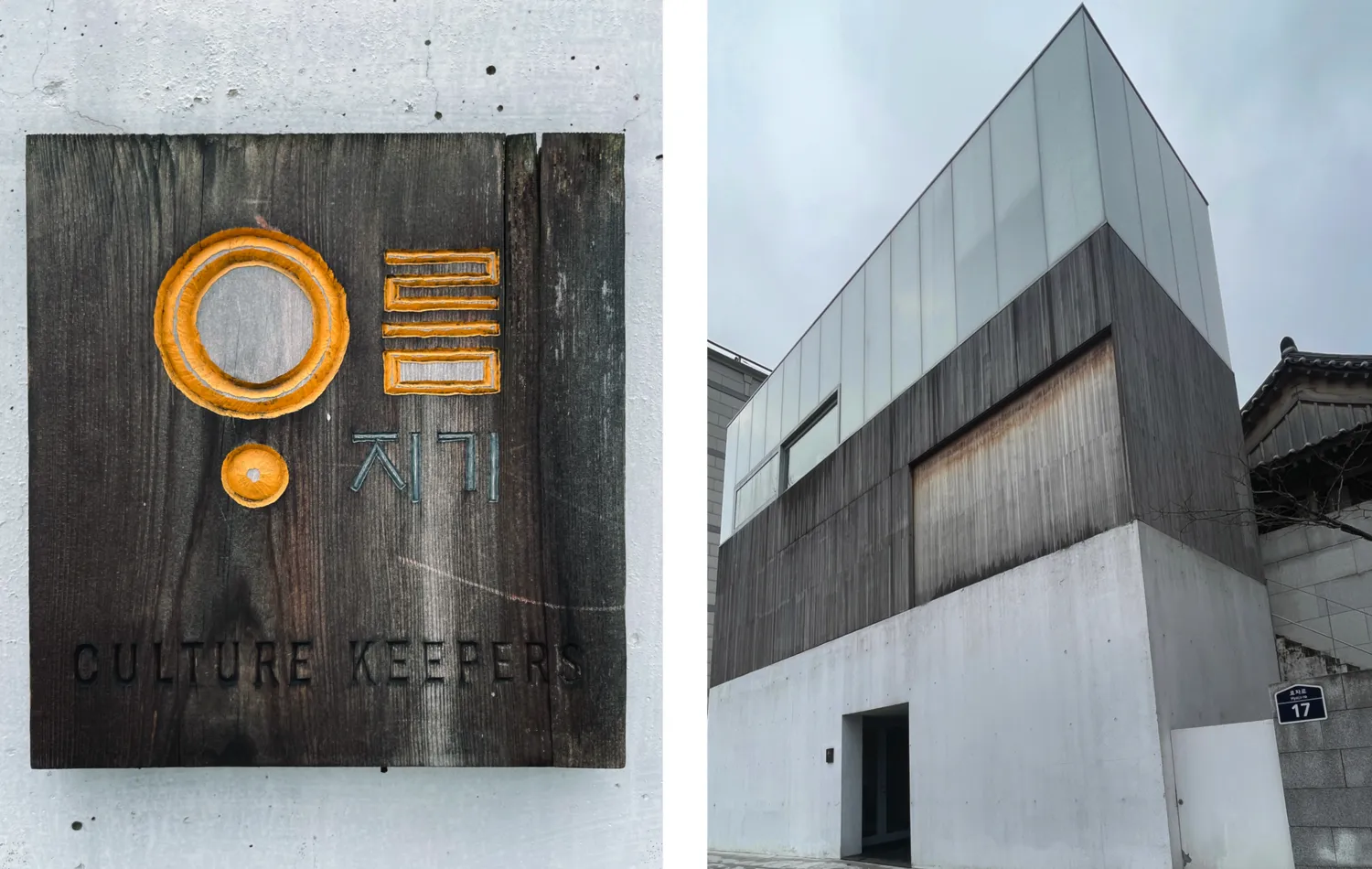
Arumjigi building
Inspired Journeys at first floor
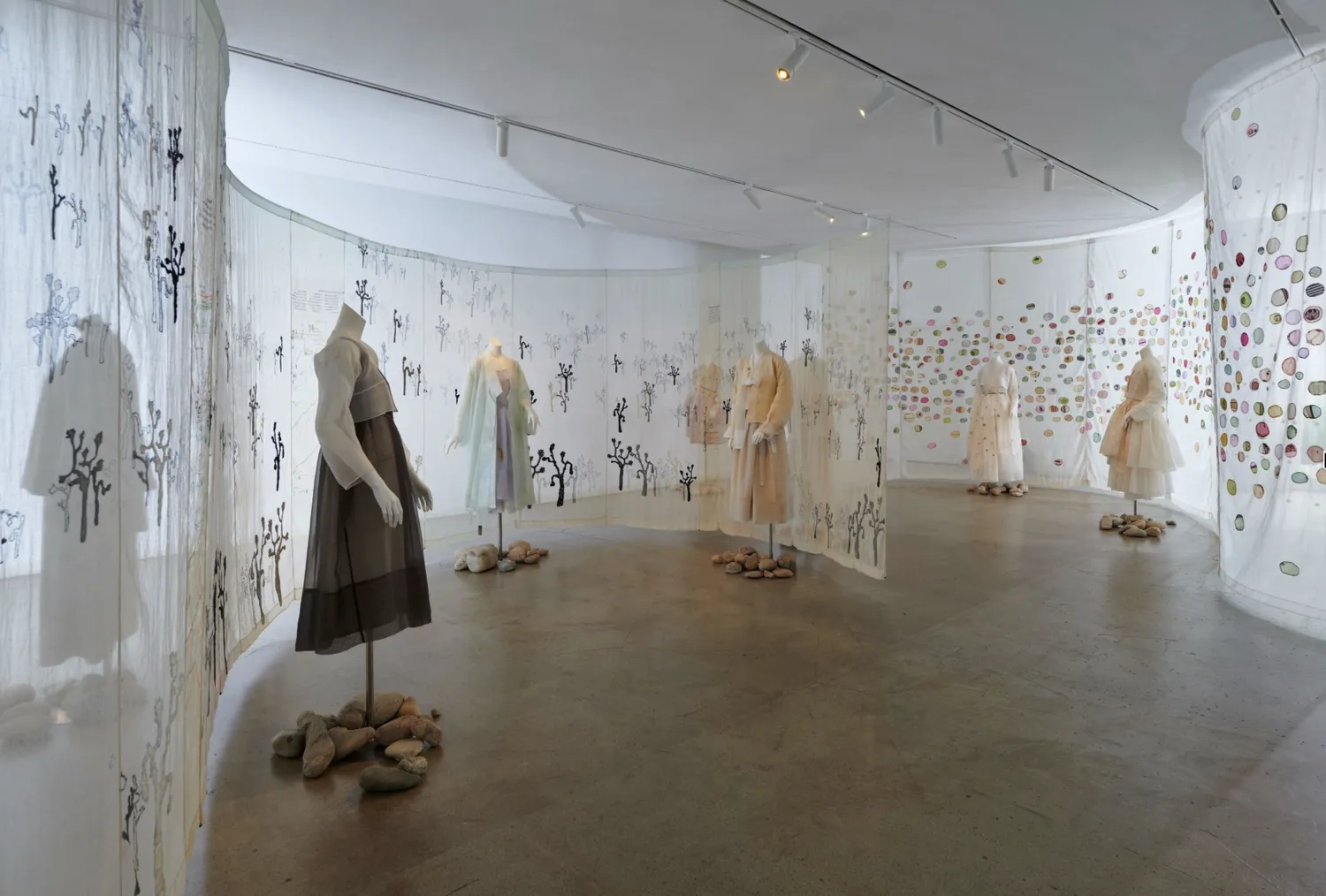
©ARUMJIGI foundation, Guru Visual(Jongkeun Lee)
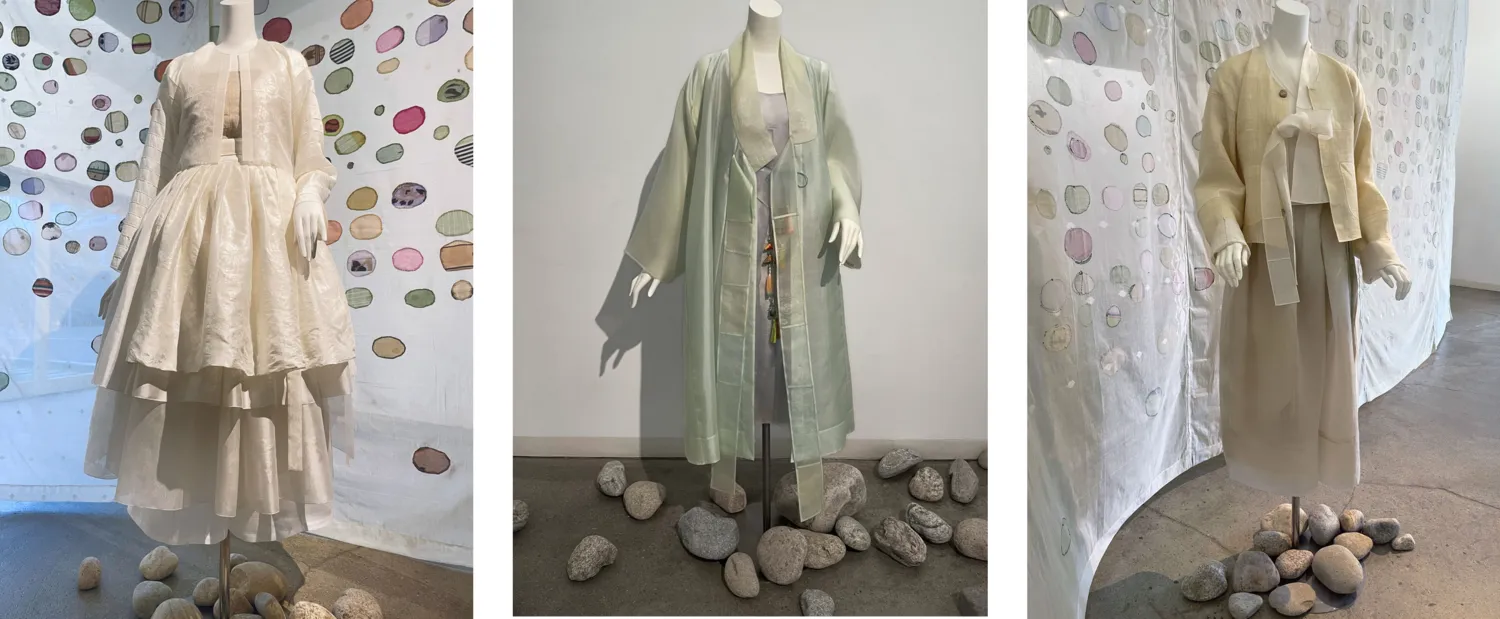
outfit #1 frost (L); outfit #2 Jeju wave (M); outfit #3 ondol (R)
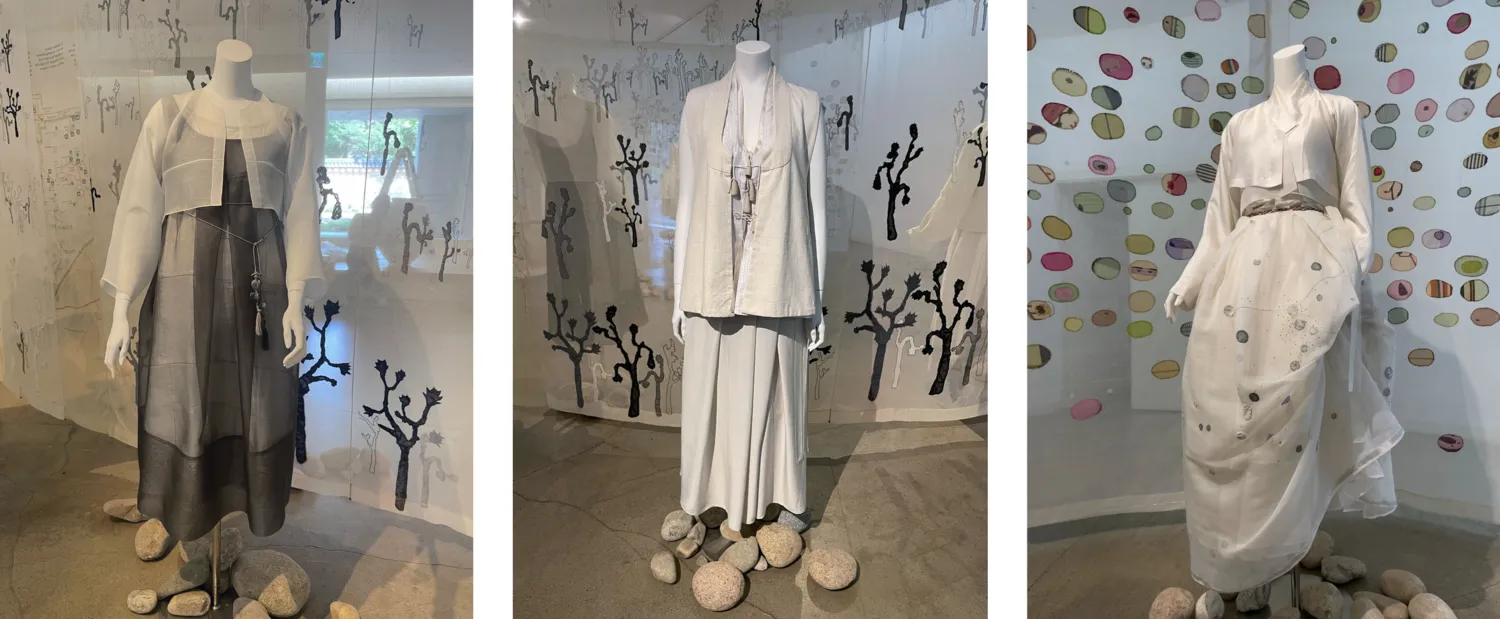
outfit #4 mica (L); outfit #6 Joseon porcelain (M); outfit #7 orion (R)
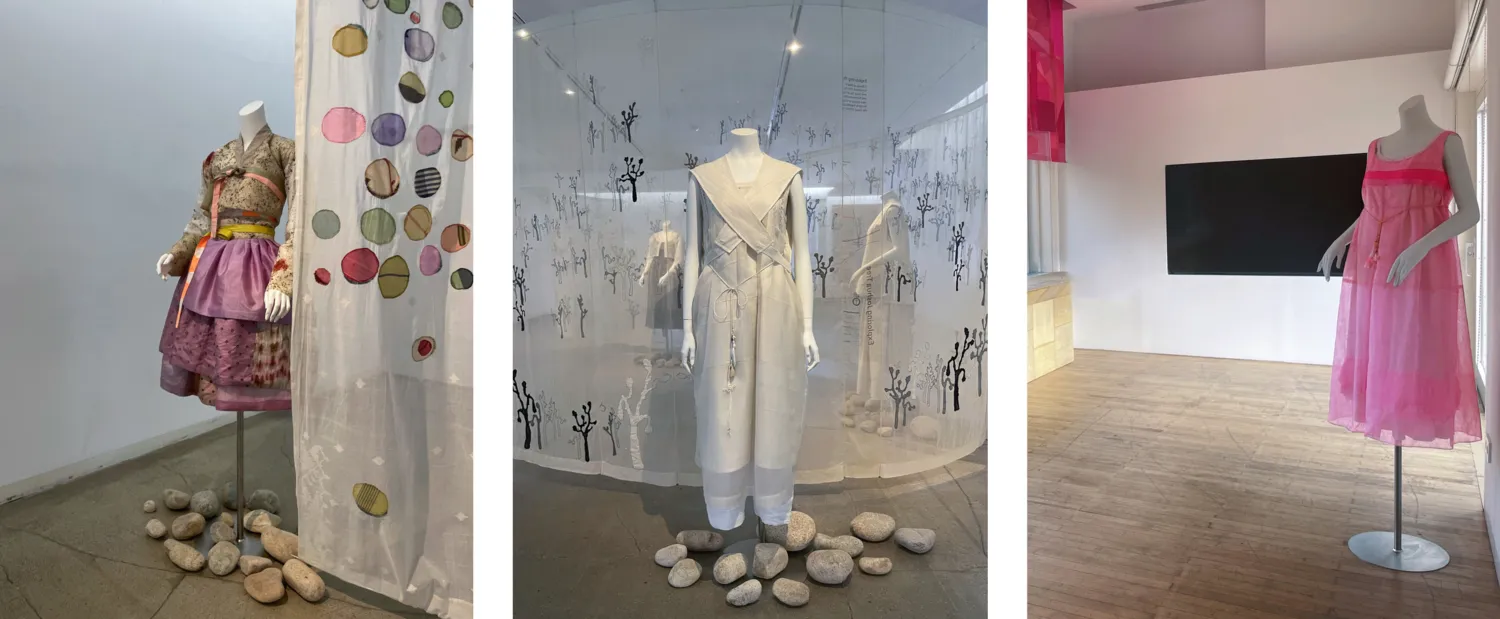
outfit #8 Anyang grapes (L); outfit #9 my Korean birthday cake (M); outfit #10 azalea/forsythia shown at third floor (R)
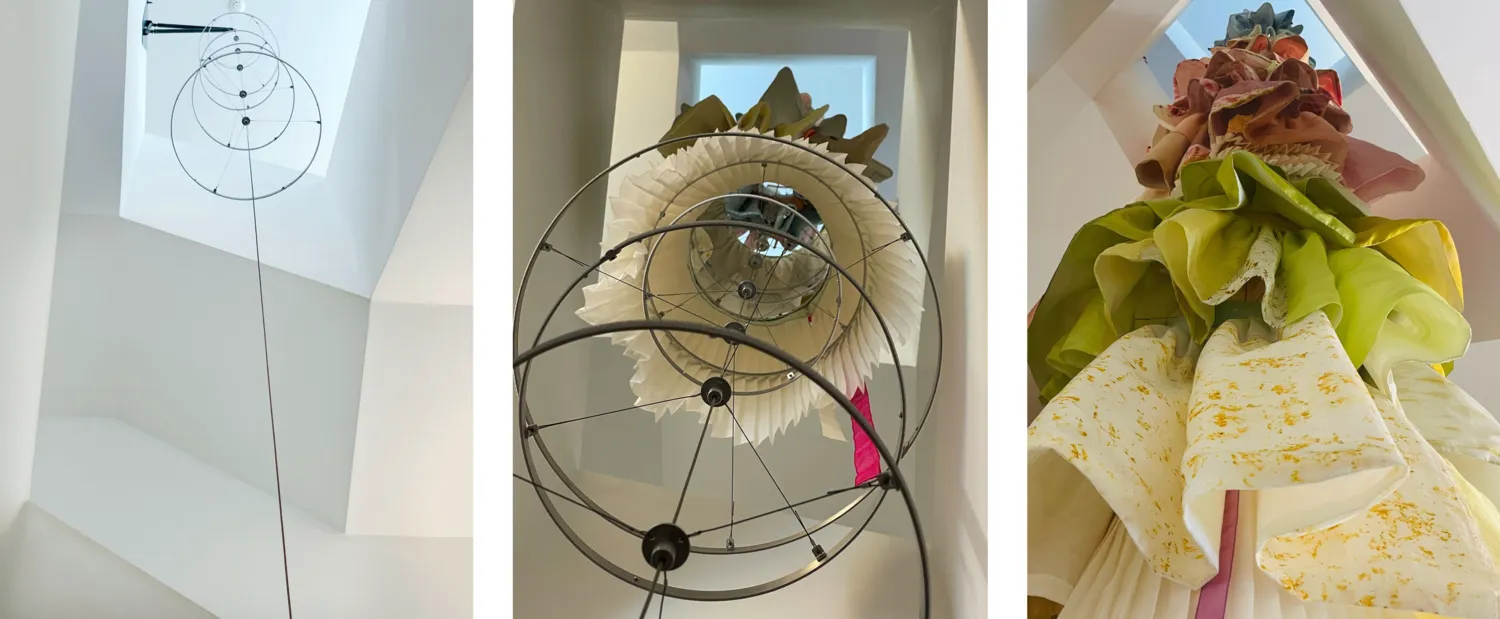
Earth and Sky apparatus (L); completed installation of Earth and Sky (R)
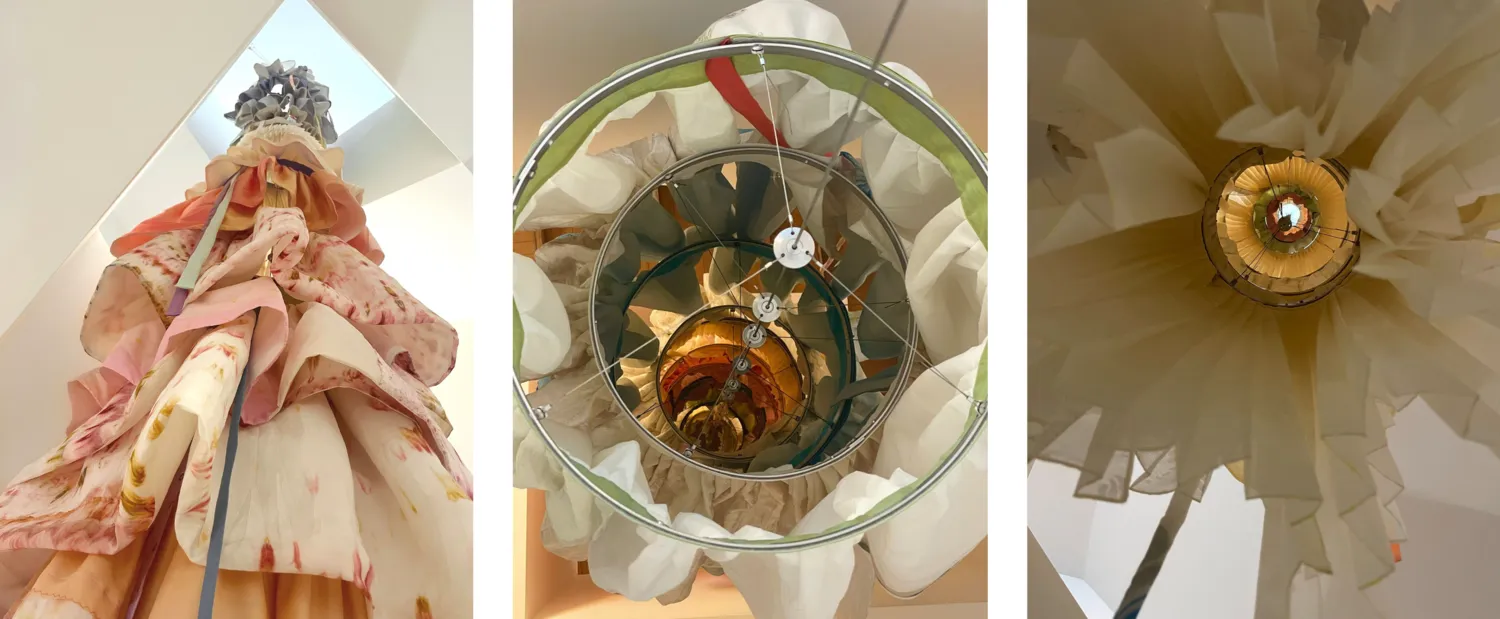
Earth and Sky, stairwell installation
Room of Memory at Hanok
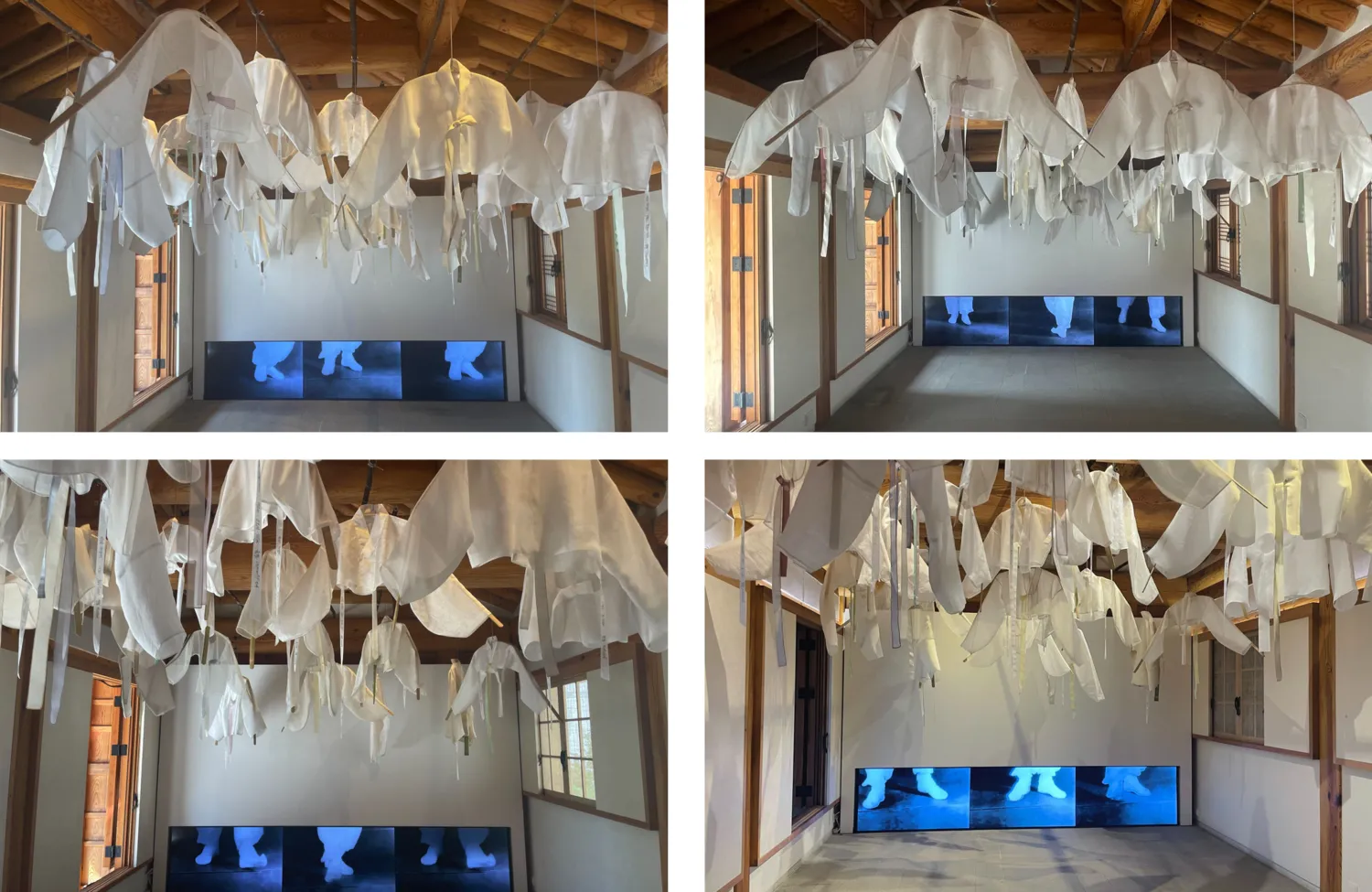
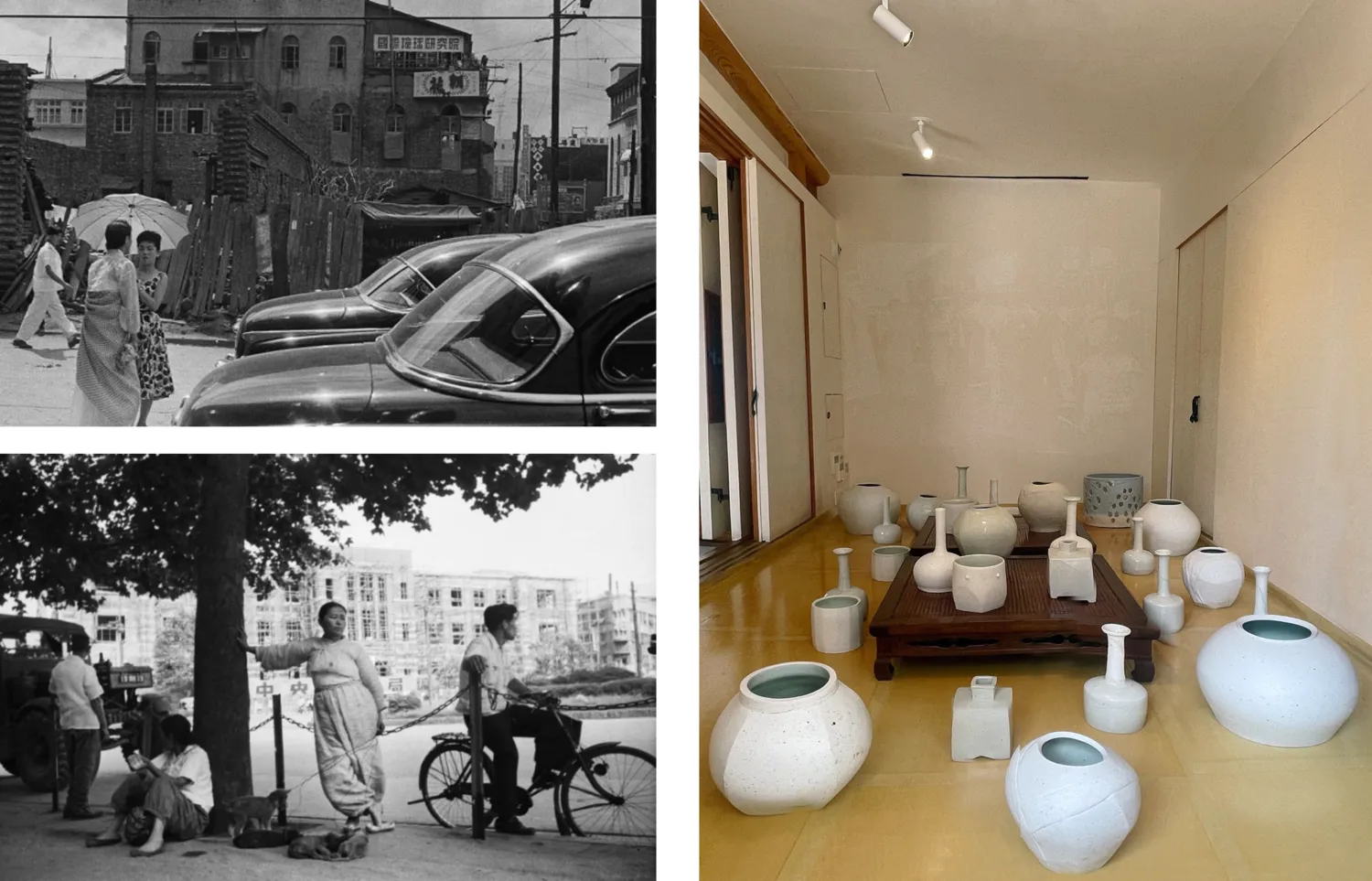
Inchin Lee’s ceramics and Han Young-soo’s photographs projected on the wall
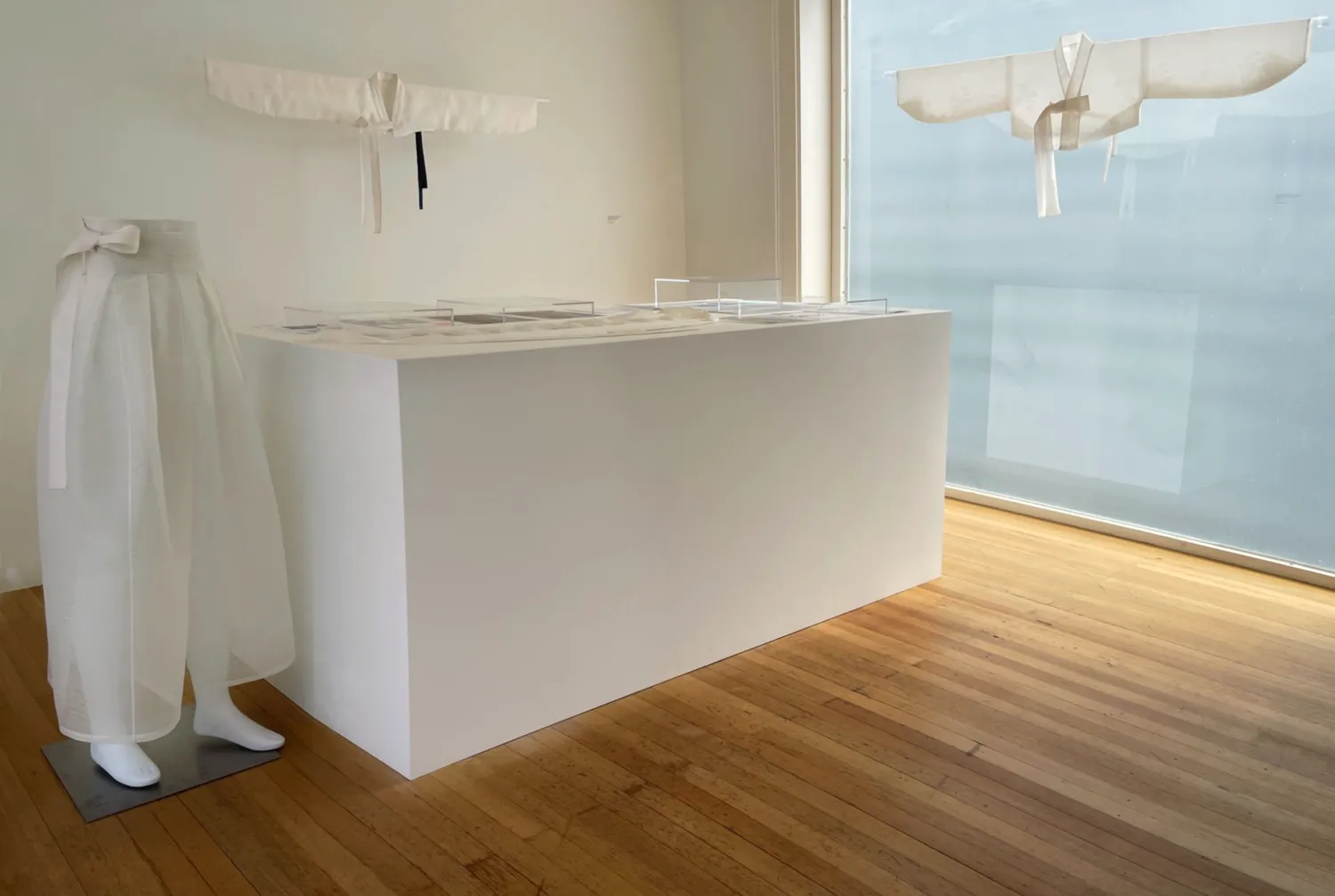
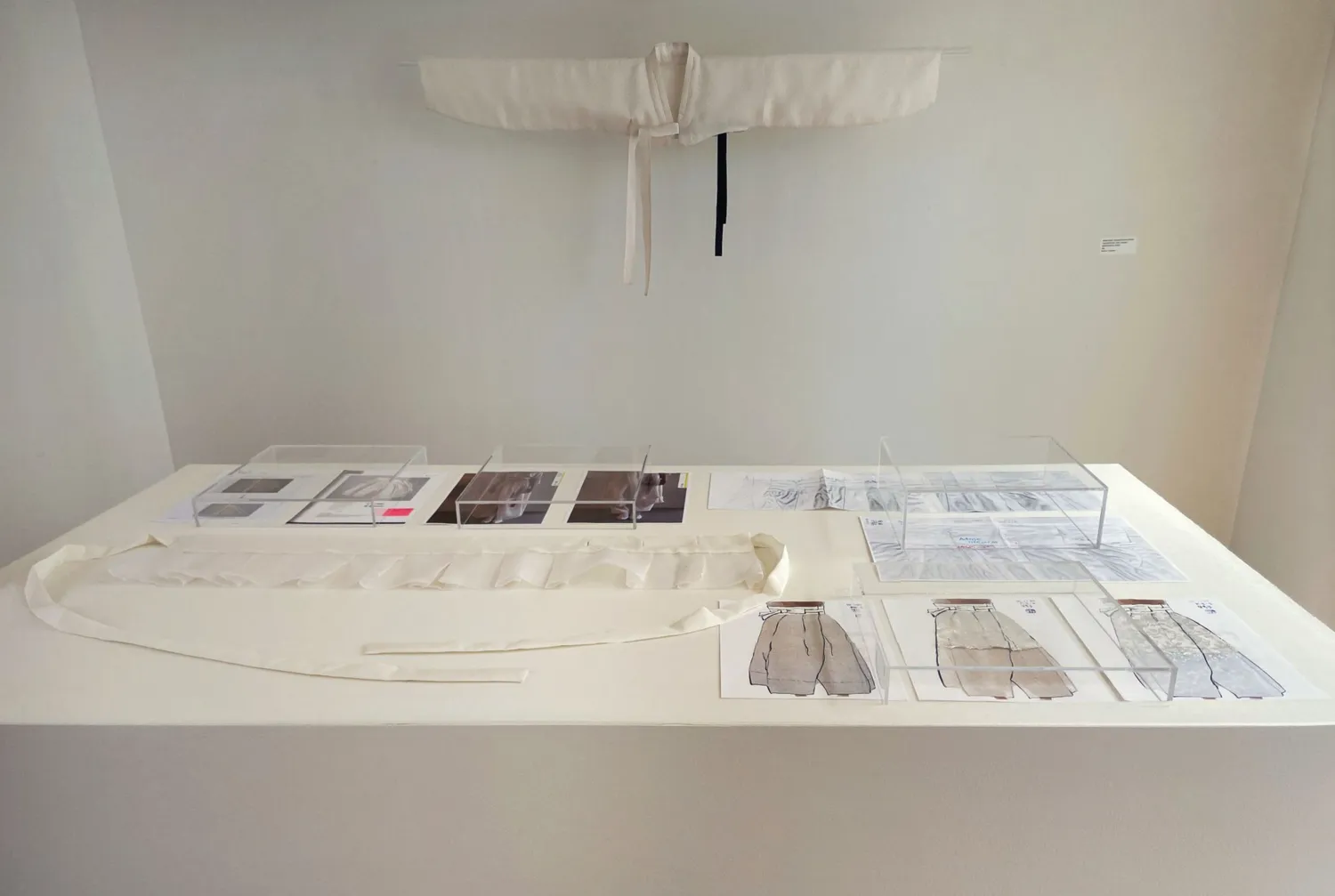
Stitching Stories at second floor
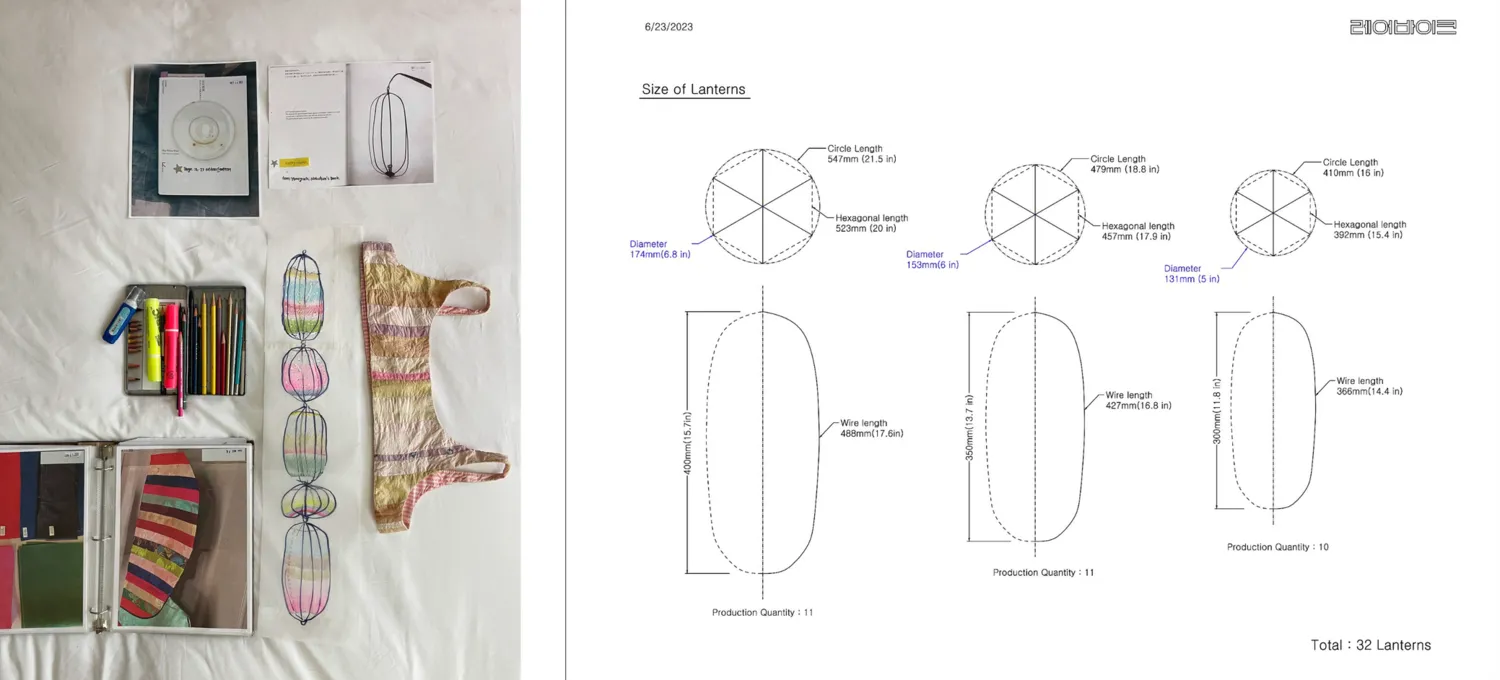
Christina Kim’s proposal drawing of lanterns at BoAN Stay
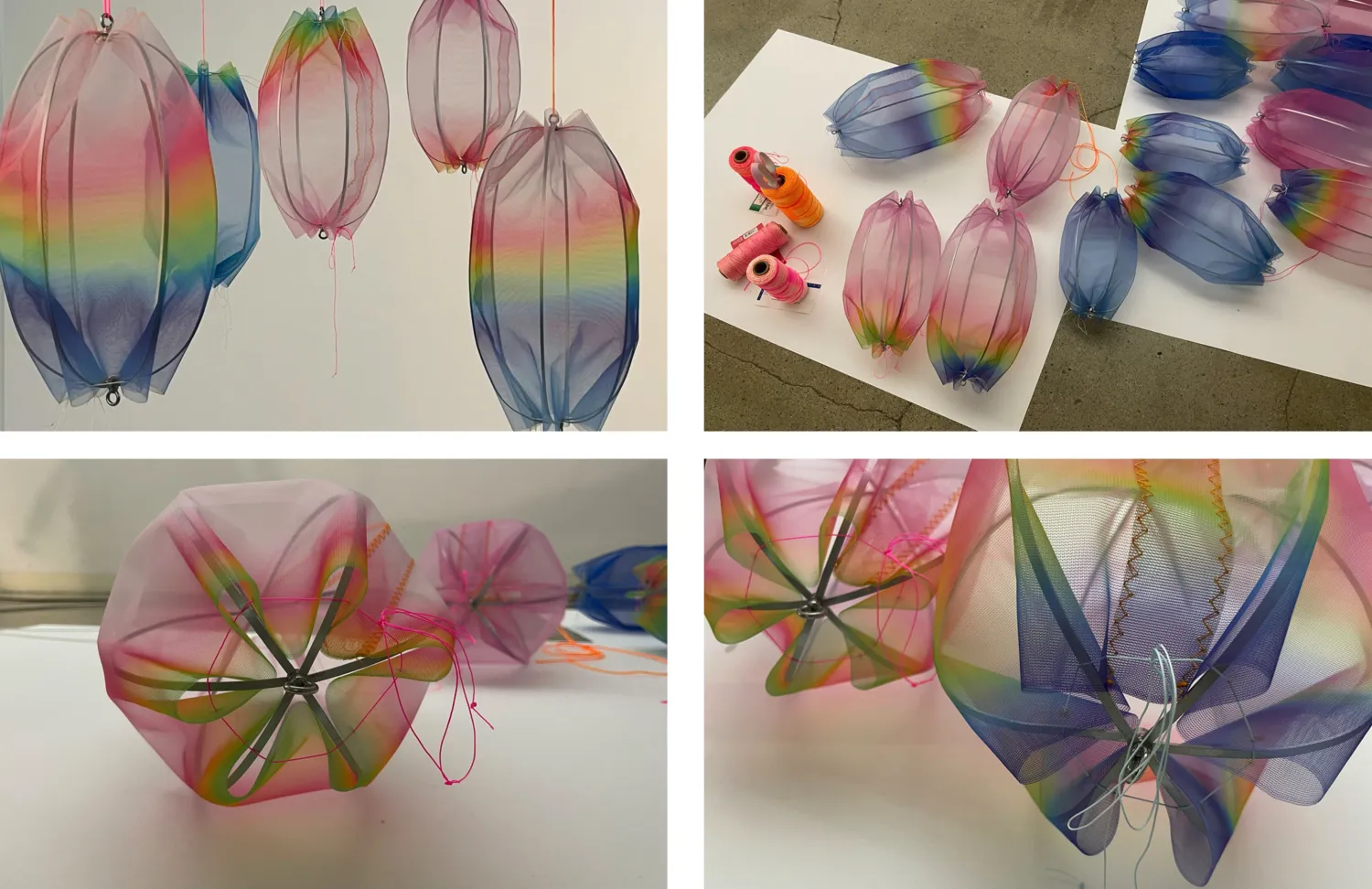
aurora borealis variations
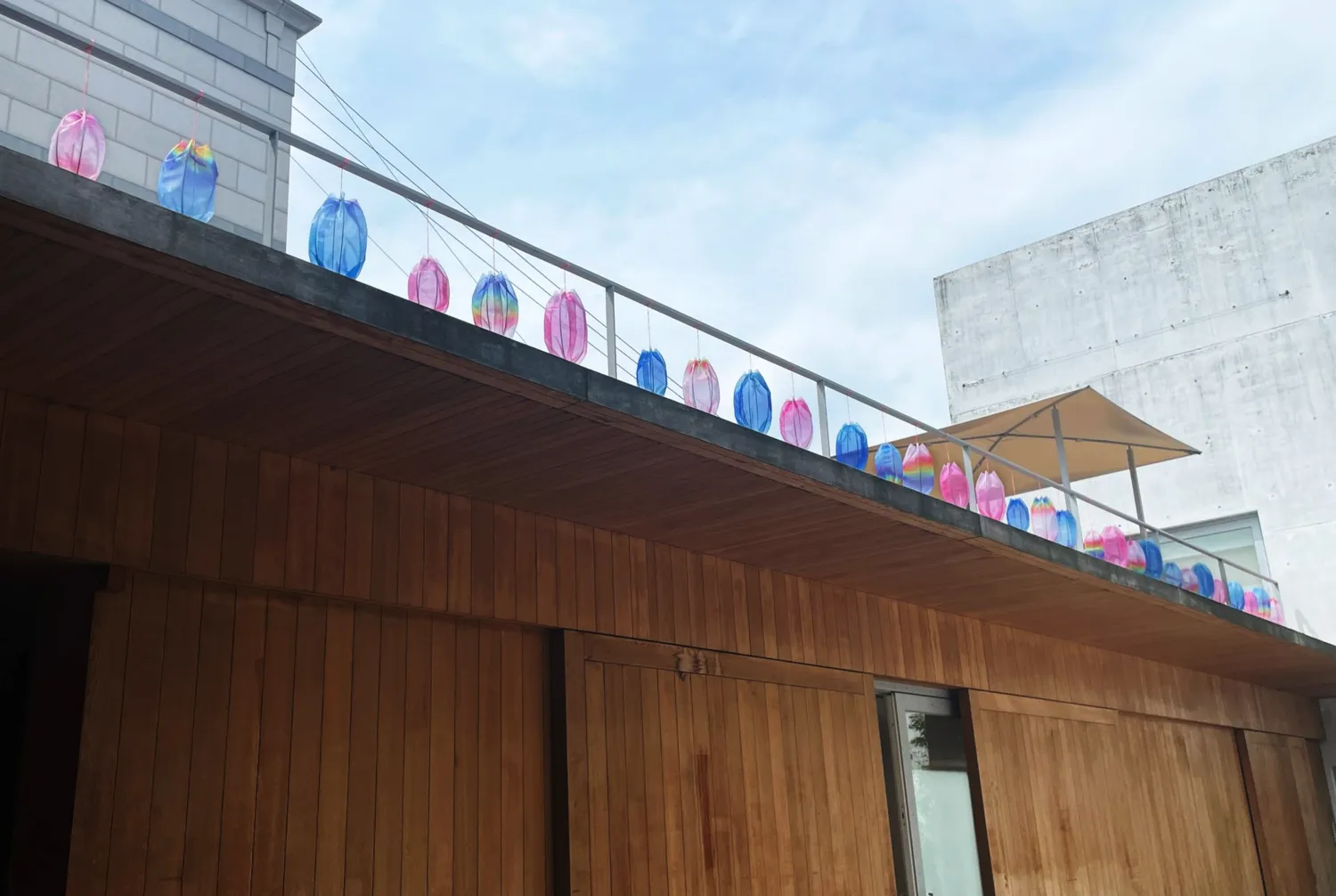
lanterns at courtyard
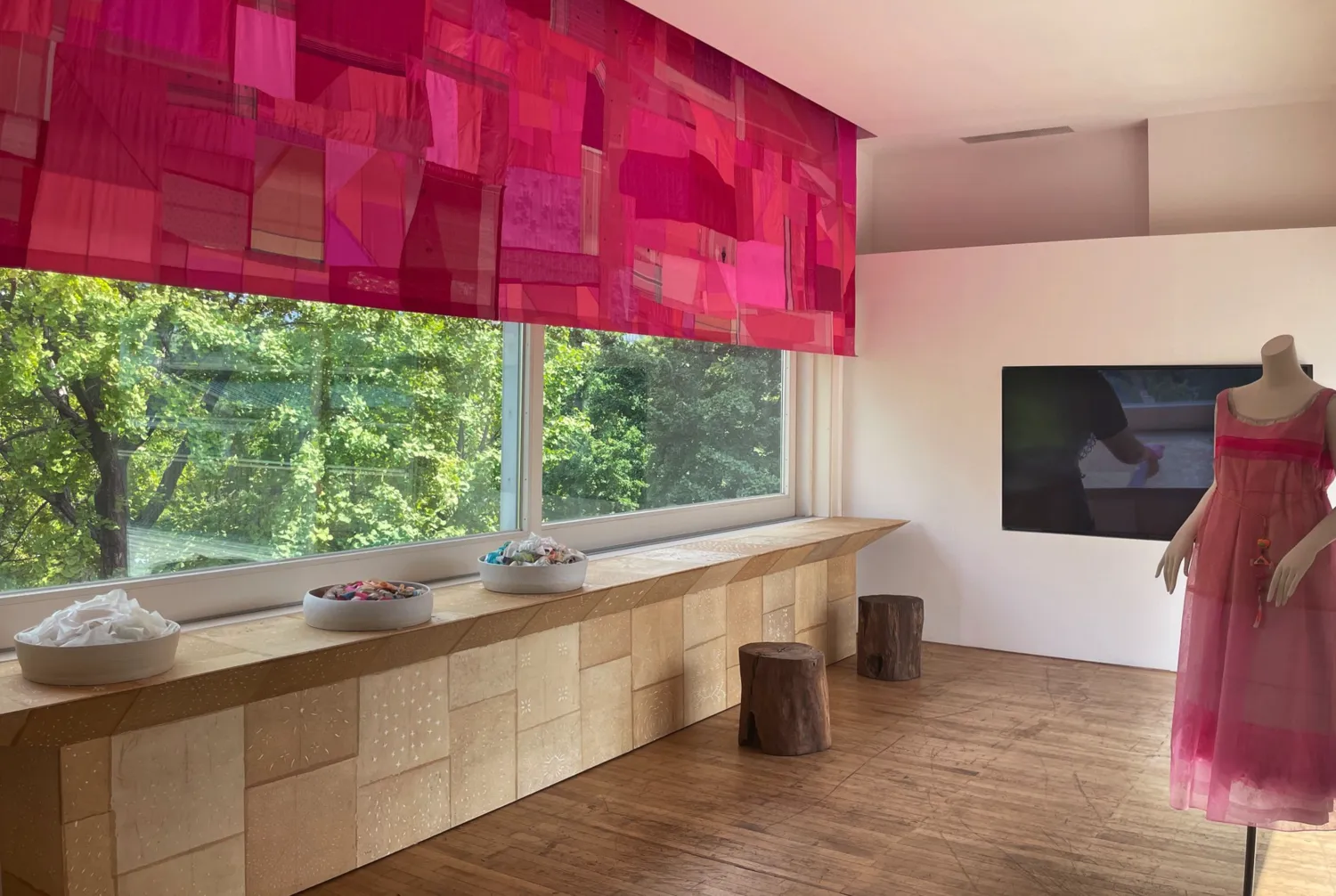
The Art of Sustainability at third floor
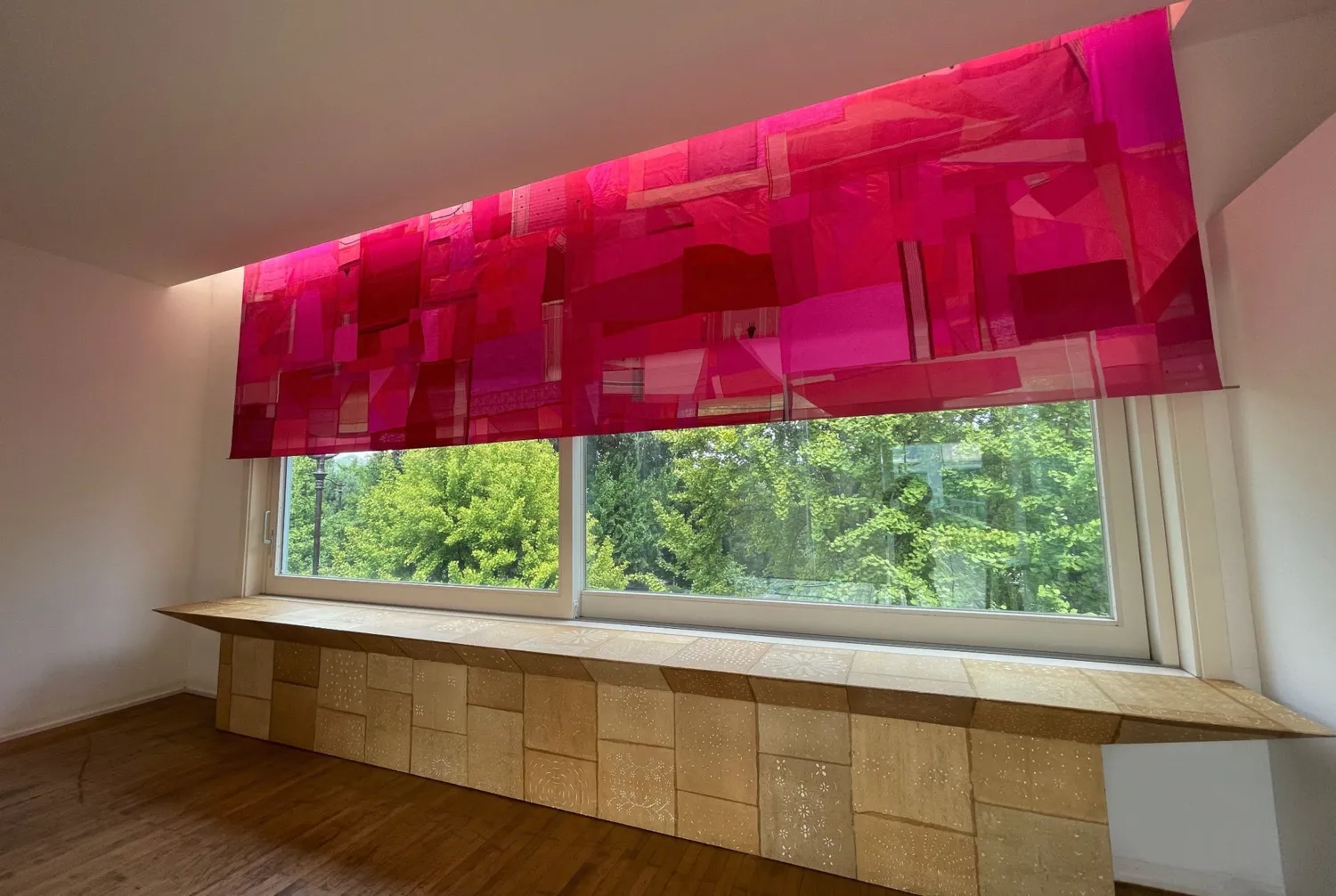
©ARUMJIGI foundation, Guru Visual(Jongkeun Lee)
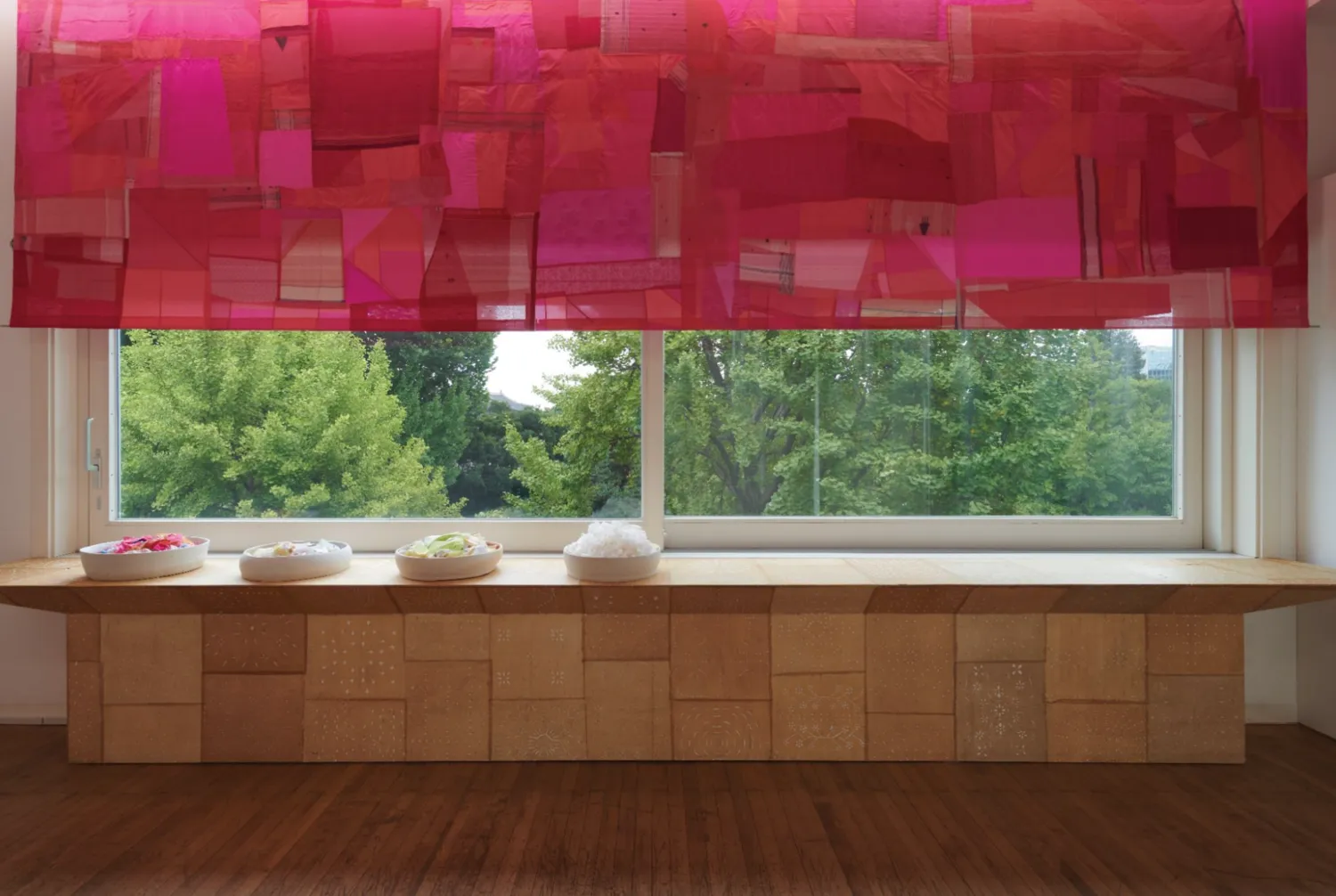
Korean Color Study at basement ©ARUMJIGI foundation, Guru Visual(Jongkeun Lee)
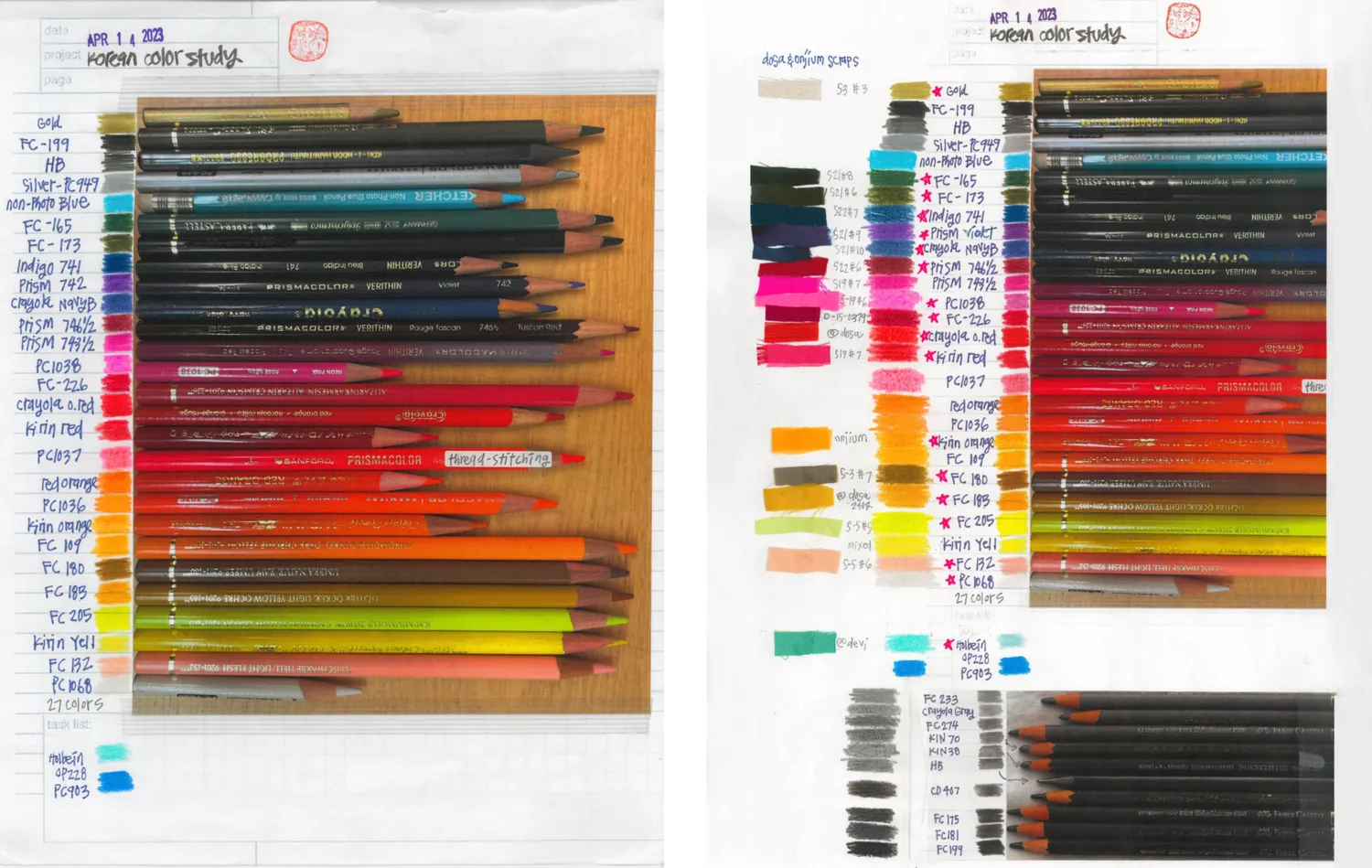
color pencils for korean color study (L) / 한국 색 연구를 위한 색연필 (왼); selected scraps with matching colors (R) / 색감에 맞는 조각지들 (오)
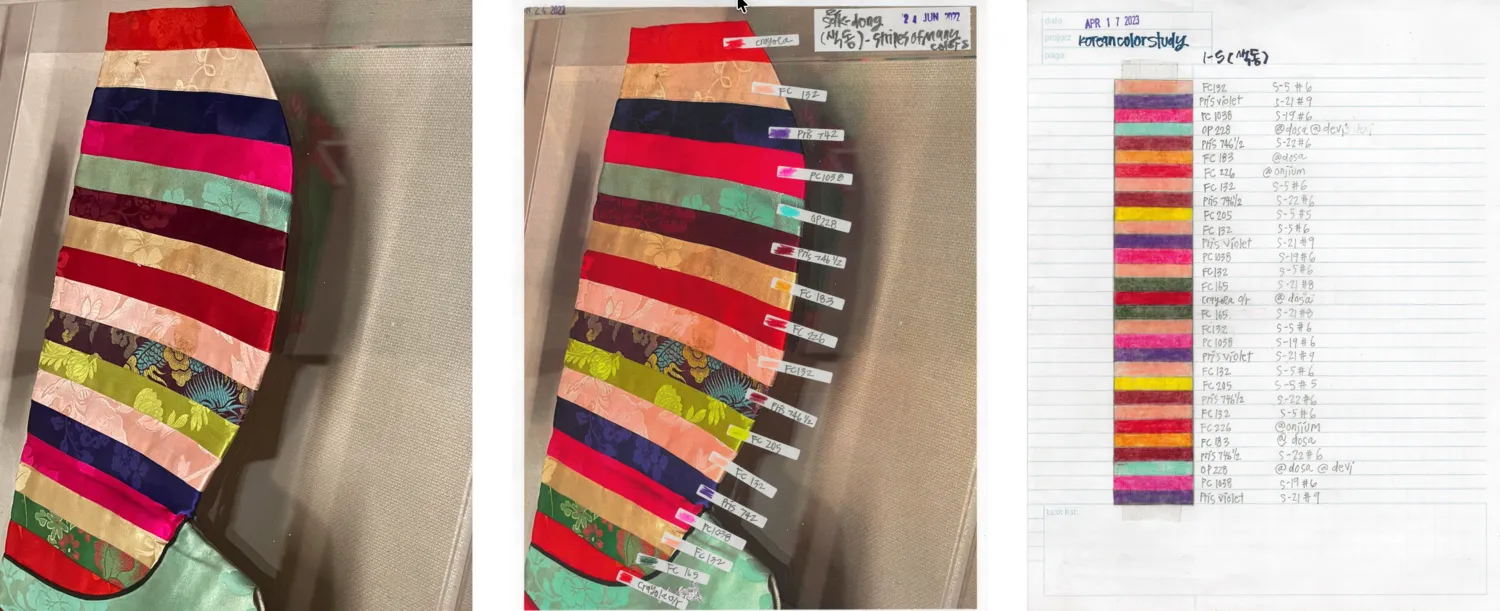
saekdong jeogori, June 2022 (L) / 색동저고리 – 경운박물관, 2022년 6월(왼쪽부터); color matching - April 2023 (M) / 컬러 매칭 – 2023년 4월; attaching maedup to norigae amulet (R) / 컬러 레이아웃 디자인 1S – 2023년 4월
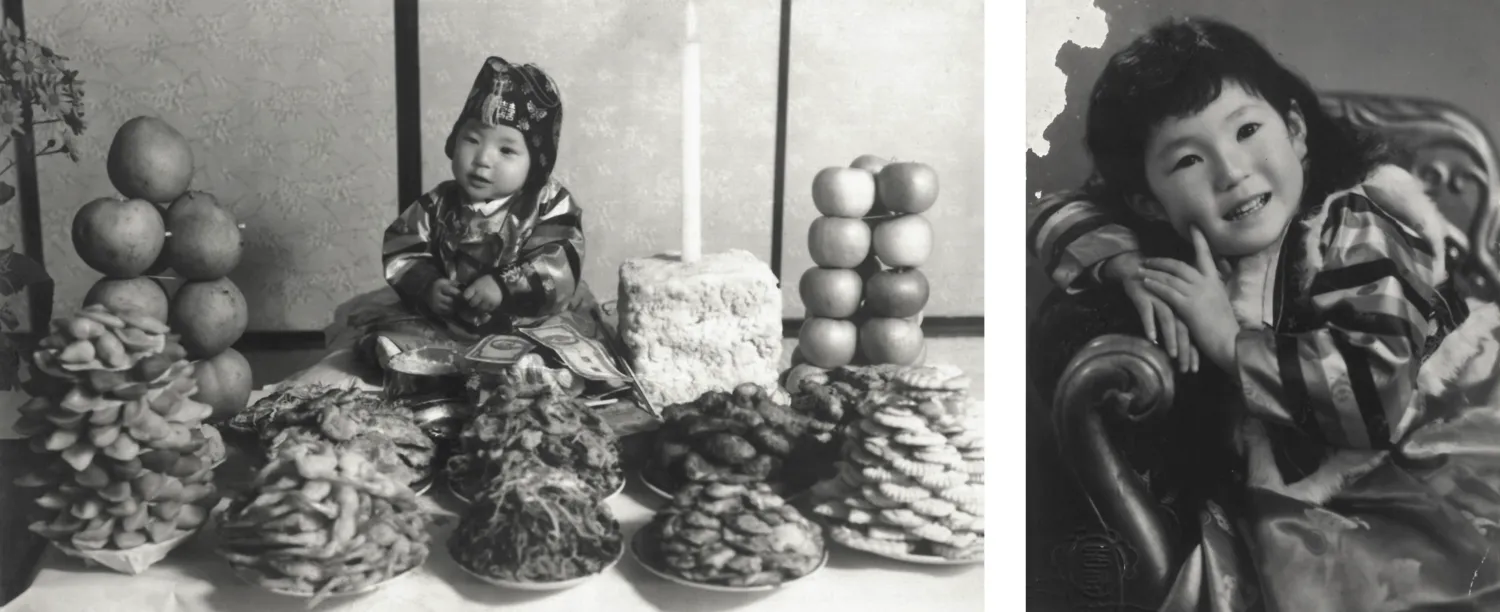
Christina Kim’s first birthday and fourth birthday wearing saekdong / 크리스티나 김의 첫 돌잔치 그리고 색동을 입고있는 4번째 생일
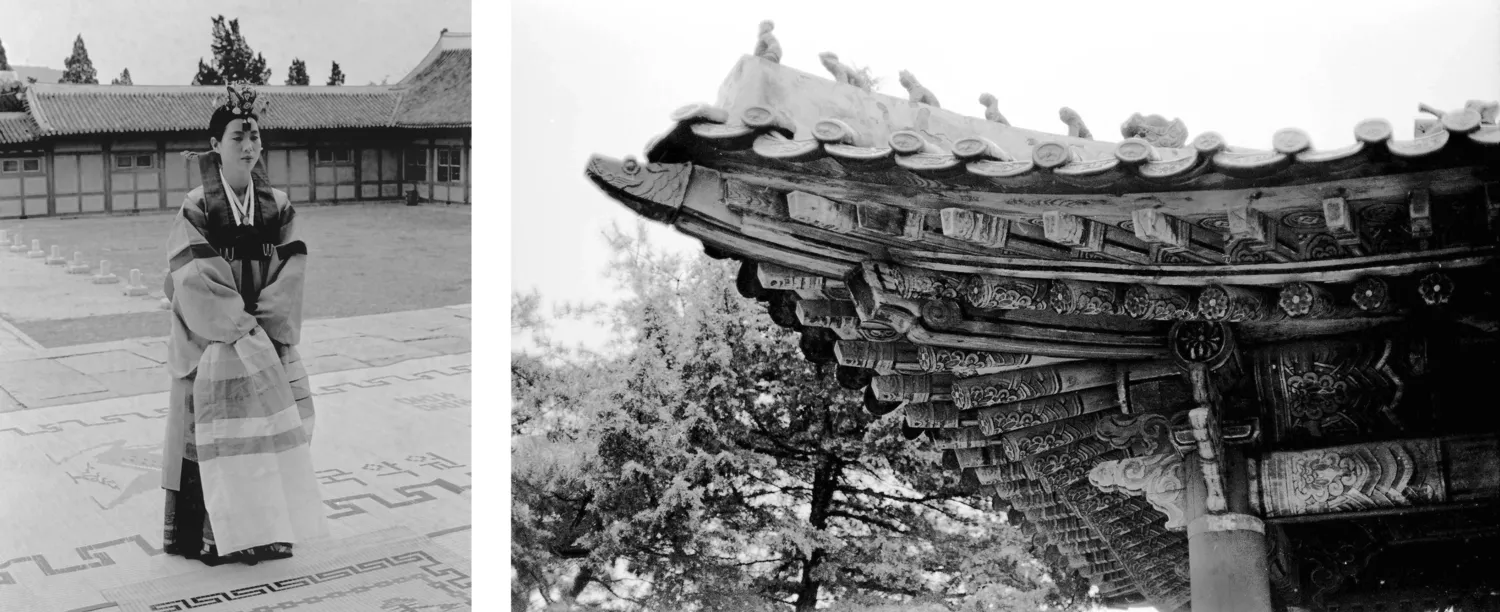
photograph by Robert Garfias in 1966 / 1966년도 로버트 가피어스가 촬영한 사진
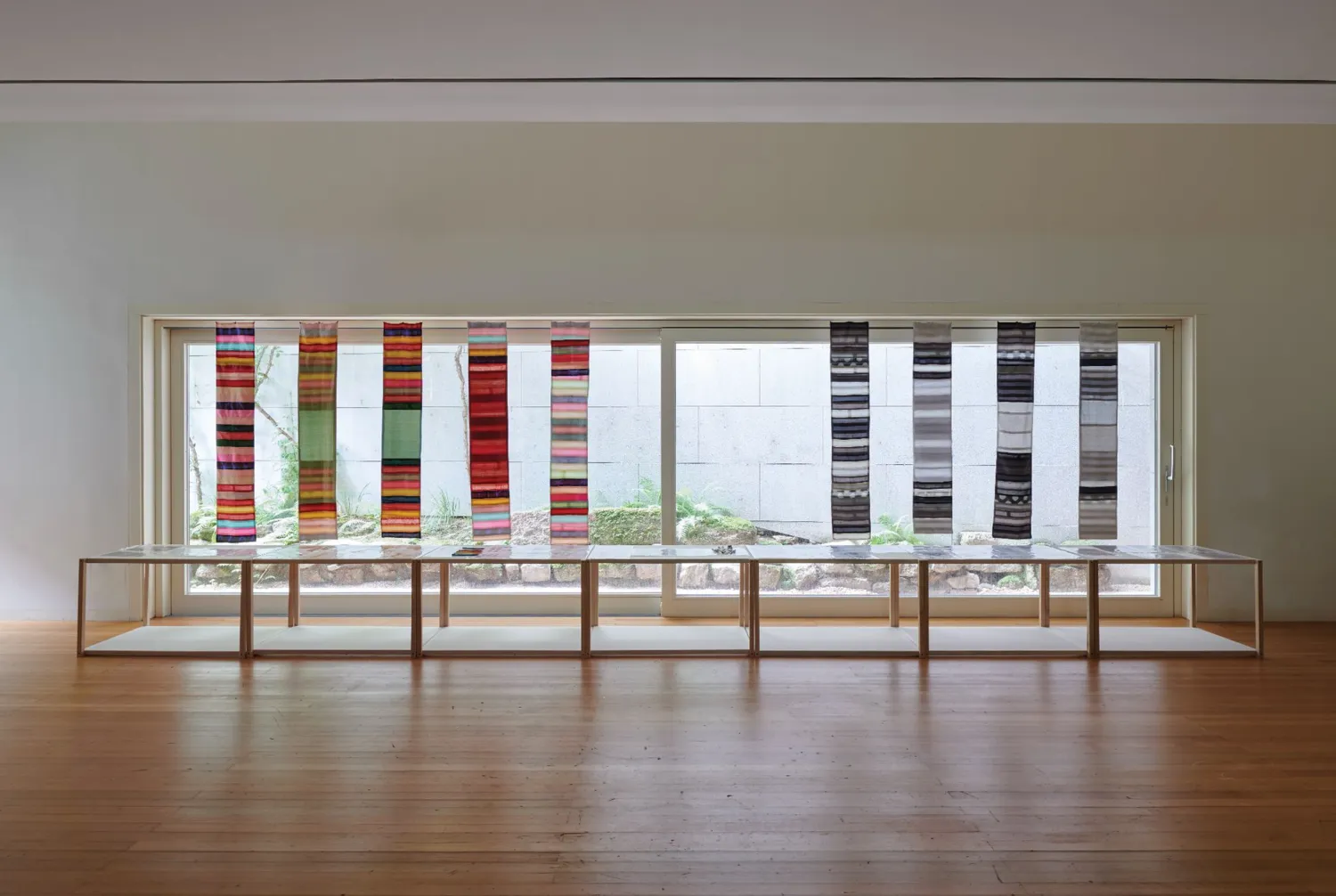
saekdong scroll scarves
blurring boundaries: hanbok, revisited
2023
Seoul, Korea
artist statement from blurring boundaries: hanbok, revisited catalog
As a child of Korea, I wish to express my deep and sincere gratitude for the opportunity to prepare an exhibit at Arumjigi [Culture Keepers Foundation]. Together with its sister institution Onjium, Arumjigi is a foundation dedicated to the awareness, appreciation, and preservation of traditional Korean cultural practices, particularly Korean craft practices, and to the continued engagement and relevancy of those practices in modern life. It's an endeavor that I feel parallels important aspects of my own life's work.
I was born in Seoul in 1957, four years after the Korean War. My first memories of domestic life are in an earthen floor hanok, the traditional Korean-style house. MY grandmother wore traditional Korean clothing. We prepared Korean meals. Our lives were probably organmnized much as they would have been decades prior. But the world was changing: fashion, record platers, film, education, travel, our first television, our first refrigerator. I remember being taken by my uncles to stylish openings as modern art began to take root in Seoul. Images from one exhibit, works on rice paper marked with scratches, remain etched in my mind. That starkly contrasting but exciting mix of tradition and the new defined me.
I left Korea at 15 to join my mother in Los Angeles. I studied art at the University of Washington, moved to Italy, then New York. I started designing clothes. More than forty years hence, my work has taken me to five continents, and, in recent years, quite meaningfully, often back to Korea.
My work has always been informed by bits and pieces of memory and by what I learned as a child in Korea. Cooking, sewing, gardening, making: in Korea it was done simply, elegantly, beautifully with the materials at hand. A deep sense of nature always seemed present in Korean craft. I sometimes quote Korean techniques, bojagi or Korean patchwork for example, or even tradtional Korean shapes in my design work. Other times I borrow from memories, But the focused, deliberate way of working I associate with Korean craft always informs my work. The simplest tasks, done well, take on meaning.
In August 2021, Arumjigi asked me to prepare designs of contemporary clothing pieces for an exhibit. The pieces were to be based on hanbok, or traditional Korean clothing, but wearable today.
I was introduced to the team at the clothing studio of Onjium, who naturally proved very knowledgeable and helpful, and allowed me to access the library there.
I also met the industrial designer Jongbuhm Kim of the studio tarebike and the ceramicist Inchin Lee. Jongbuhm was instrumental in helping me realize elements of the exhibit installation, in particular the metal frames for the lanterns and for the suspended installation in the stairwell. His help realizing the curving textile scrim installation was critical. I have long been inspired by Inchin's ceramics, by their directness, heft, and presence and suggest something to me that is very Korean at heart. Inchin made ceramic buttons for some of the clothing pieces.
I began the project studying traditional shapes: jeogori, the woman's blouse; durumagi, the traditional men's robe, three different styles of traditional men's vests; deunggeori and baeja. I was particularly struck by how the changes in one style, jeogori, seemed to telegraph the rise of Western influences, just noticeable in a blouse from 1915, more apparent by 1920, very evident in pieces from 1940 and 1950. I looked at seven-layered Joseon Dynasty undergarments.
Those undergarments, slightly minimalist, less distinctly traditional, inherently suggested modern shapes. I chose to work with several of the pieces.
Three other shapes in the show are derived from a Korean-inspired collection for my clothing line, dosa, that I did in 2012.
I generally had an idea of how I might want to rework the pieces into something more contemporary. I tended to make decisions in a personal way, with sensitivity and admiration for the past, but with the knowledge of who I am as a Korean today. I began to think of the pieces less literally as traditional shapes and more about their connection to the Korean culture. I imagined how some pieces could be mixed—a men's vest with a design inspired by a one of the Joseon undergarments—into something new.
Working with the clothing studio of Onjium, we were able to make patterns of the traditional pieces I was interested in. This generally involved going to a museum or private collection to measure the actual piece. Once we had measurements, we would make a pattern based on the measurements and then sew a version of the garment using that pattern. From that point, I would modify the pattern and the fit, a process that typically leads to new design inspirations.
While designing, I gave thought to garment fit and functionality, to make pieces that are easier to wear and easier to care for. Historically, some traditional garments had to be taken apart and resewn for washing. I suggested washing the raw fabric first, before sewing, to minimize shrinkage. We made slight changes to the patterns, altering the cut to better follow the contours of the body.
Some of the pieces are made from traditional Korean fabrics, if used in a slightly different way. For example, I switched the typically brightly colored stripes in saekdong to monochromatic shades of charcoal, or to fields of whites in varying material, pattern and transparency, yet still sewn with traditional fabrics.
The making of saekdong, which customarilv involved sewing together disparate bands of cloth, rather than reproduction of the bold stripes (today, often by weaving), seemed more essential. That approach appealed to my Korean interest in making as well as my long-time interest in recycling and use of scrap, an interest that itself ties back to traditional Korean cloth and clothing making
I spent a considerable amount of time studying Korean colors, in particular the five directional colors: yellow or earth, black or water, red or fire, white or metal, blue or wood, that are tied to the rise of Buddhism and so important in Korean traditional clothing design. I resisted the sometimes artificially bright modern versions, preferring the natural dyed versions from heirloom pieces.
The color-study scarves in the exhibit derive from those investigations. Other colors in the collection are based on Korean nature or my memory of life in hanok: earthen floor, radish soup, pine nuts, hemp, charcoal roof, porcelain, talc & chalk, frost.
The exhibit displays nine mannequins wearing nine ensembles, each with various pieces, typically layered. Altogether, there are thirty-four individually designed pieces in the nine ensembles.
I thought a lot about how to present these designs in the Arumjigi space and very much wanted to communicate the inspirations of Korean nature and Korean colors.
In the stair hall, which recalls, for me personally, the stairs at Rudolph Steiner's Goetheanum, the Hagia Sophia, and the minaret of the Great Mosque of Samarra, we hung an installation of twenty-two pieces, sixteen dosa "Eungie" skirts and six mujigi, one of the seven layers of Joseon undergarments. These pieces were inspired by the study of Korean colors for this project, earth and sky, and were sewn specifically for the installation. Jongbuhm Kim designed and built the metal armature.
The mannequins are arranged in the winding spaces created by suspended textiles scrims. I brought the textiles, prepared for previous installations, from my studio in Los Angeles. The inspiration for these textiles originally came from a keen interest in the Light and Space art movement, particularly the semi-transparent, ambiguous space-making scrims of Robert Irwin. The textiles also show my interest in handwork, the use of scrap, and, importantly, nature.
They are informed by my travels and encounters with natural landscapes that I have found so moving. The installation at Arumjigi consciously references traditional Korean multi-panel folding screens, used to define space and to gather works of individual panels, like a book, to be appreciated individually or together as a whole.
The installation includes a video from films of traditional Joseon Dynasty Court dances shot by Robert Garfias in the late 1960's. Garfias is an ethnomusicologist and was a professor at the University of Washington in Seattle at the time of this project. Several months ago, a curator from Arumjigi introduced me to this work. Kismet, Mr. Garfias turned out to be related to a friend of mine and this summer he came to our studio in Los Angeles for a visit. He gave me permission to include the work in the exhibit along with some of his photographs. The pieces obviously resonate with me and I wanted to share them.